The beautifully spotted snow leopard, also known as the "ghost of the mountains," is currently listed as a vulnerable species on the IUCN red list. It's hard to make firm estimates of their populations due to the species’ secretive nature, low density, and occupancy in distant territories, as these characteristics cause lower detection rates. Within recent years, studies have confirmed that snow leopard populations have actually started to reappear in some areas. An example of this is Sagarmatha National Park located in Nepal, where snow leopards were known to have disappeared from the area but ended up reappearing in 2003 after an ongoing absence of 25 years. However, it's important to note that even though populations may be reappearing in certain areas, they're still decreasing in others. There may have been localized extinctions in land areas where the Soviet Union used to be, and surveys in Pakistan have also indicated that the number of snow leopards are lower in particular parts of the country, which could possibly continue to decrease in the future.

Figure 1. Two snow leopards on a snowy mountain.
Snow leopards are found within the mountainous areas of Asia, which includes mountains from the Southern Himalayas and the Southern Siberian Mountains in Russia. Snow leopards are also found throughout the Tibetan Plateau and Central Asia. They mainly live in shrubland, grassland, and rocky areas that are cold, desolate, and dry, so it makes sense as to why they favour high mountainous areas. Snow leopards commonly make long treks outside of their homes, and take routes located on mountain ridges, cliff edges, and defined drainage lines. The productivity of snow leopards within their home range is low due to cold temperatures and increased dryness, in addition to having a low amount of ungulate prey in the area.
There are many threats towards the survival of snow leopards, including the increase in human settlements. Poaching is an ongoing problem for many species, and for the snow leopard it has been predominantly motivated by illegal trades in their fur pelts and body parts for Chinese medicine. In addition, snow leopards may prey on domestic animals if they end up on their territory, which leads to herders killing snow leopards in retaliation. Therefore, stricter hunting regulations need to be implemented to lower the amount of snow leopard deaths at the hands of poachers and herders. Climate change is also a contributing threat towards snow leopard survival, for temperatures are increasing throughout the mountains of Asia. In particular, the Tibetan Plateau became three degrees hotter within the past 20 years, and it is only expected to further rise in the future. If climate change continues at this rate, it will negatively affect the ecosystem in terms of resources, animals, water availability, and vegetation growth, causing habitats to eventually become inaccessible.
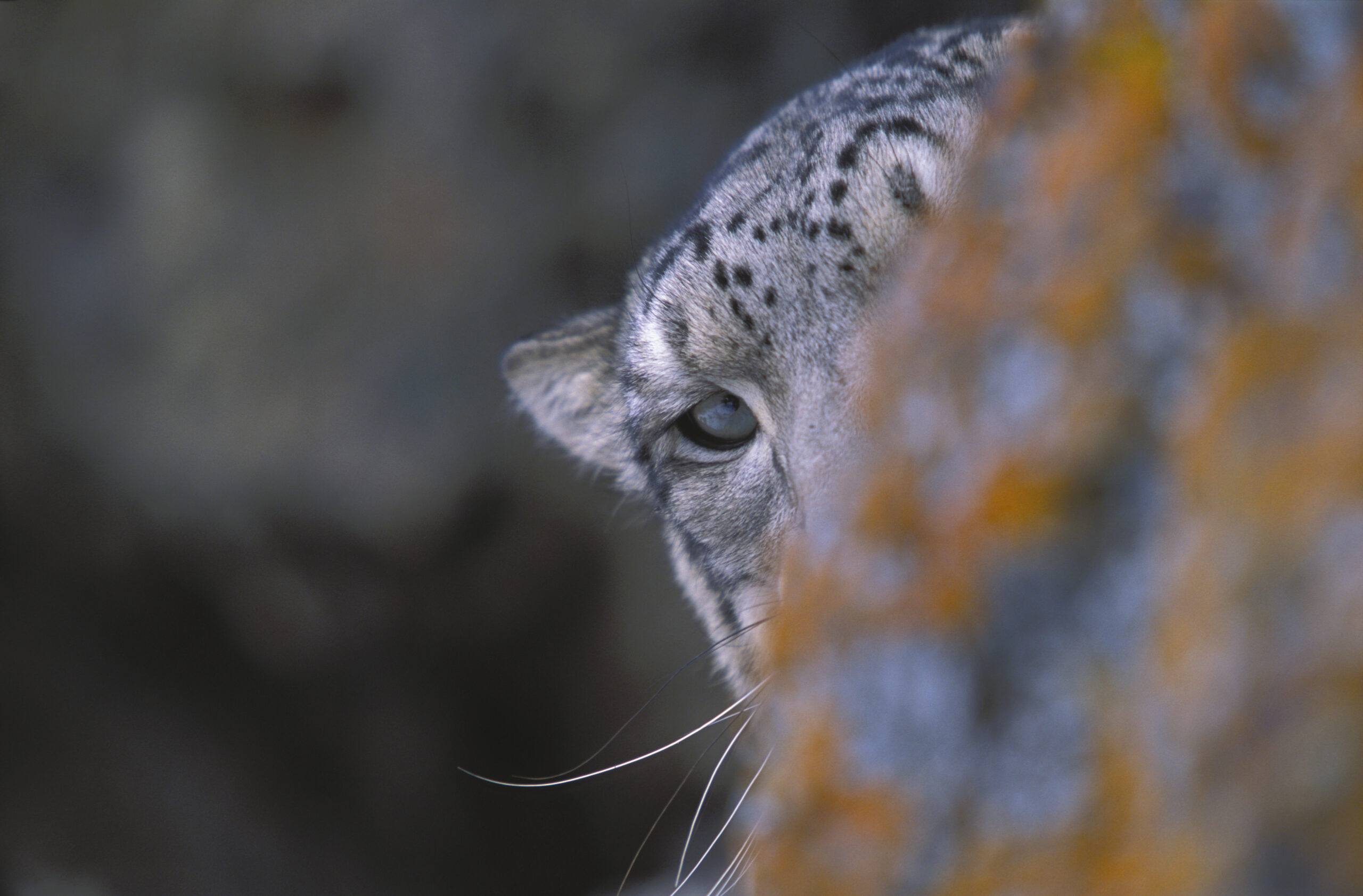
Figure 2. A snow leopard peeking out from behind a rock.
When it comes to the conservation of snow leopards, many countries have implemented strategies to protect this species. From 2009, the charity Panthera has teamed up with organizations such as Snow Leopard Trust to conduct research on snow leopards and organize community-based conservation activities within China. Field surveys are conducted for researchers to understand the dispersal of snow leopards and their habitats, and the information gained can be used to create appropriate conservation actions to protect the species. Ensuring that local communities are involved in this initiative is also essential, for they are a crucial factor when it comes to the effectiveness of conservation efforts. Starting in 1997, the Wildlife Conservation Society has implemented a multi-year program to help protect an important portion of the Gilgit-Baltistan Province in Pakistan, which is where many snow leopards live within the country. The program includes a variety of conservation strategies, such as wildlife surveys, community-based education, and the building of institutions for the management of resources. Since then, poaching in the region has significantly declined and populations of prey for snow leopards have increased by more than 50% over the past ten years.
Comments
Post a Comment