Polar bears have always held my fascination as a kid. I loved looking through wildlife photography that captured moments in action, like polar bears swimming in deep waters or trekking across the snowy Arctic. The polar bear was always a magical creature to me.
However, the polar bear is listed as a vulnerable species, indicating that the animal is up against many threats. At first, I wondered how polar bears could be at risk of being endangered. Given their presence in popular culture, including their representation as the face of Coca Cola, I thought there would be more awareness towards protecting polar bears. But after learning about threats towards their survival, I realized that it may not be as simple like I originally thought.
Polar bears play an essential role in Indigenous culture and traditions, having been linked to Indigenous ways of living for millennia. The selling of polar bear hides is financially beneficial for local people, providing a substantial amount of income. The fur is used to make trousers and boots for protection and insulation from the cold winter. Overall, polar bear hunting is largely based on subsistence. Outside of this region, the hunting of polar bears is being heavily monitored. In Canada, Greenland, and United States, polar bear hunting is government-regulated whereas it is completely banned in Norway and in certain areas of Russia.
Indigenous peoples, particularly the Inuit, hold a deep respect for the polar bear and worship the animal, providing offerings as a sign of respect as well as holding death rituals after a successful hunt. Polar bears are respected as a symbol of resilience and determination, and are featured in Inuit spirituality, storytelling, art, and other cultural mediums.

Figure 1. An Inuit sculpture carving of a polar bear.
Obviously, any form of hunting is a threat to the survival of any animal. But in the case of the polar bear I thought that, since hunting is highly regulated and subsistence-based, it can't be the only reason for their decline. There has to be another major reason as to why the polar bear population is decreasing. After familiarizing myself with the lifestyle of polar bears, I found that there is a more recent phenomenon contributing to the decreasing population: climate change.
Now I know climate change doesn't seem surprising as the issue of global warming has been known for quite some time. But the problem is that many don't realize just how fast this is occurring, and how big of an impact man-induced climate change has on polar bears today. Global warming has a detrimental effect on Arctic sea ice, causing it to shrink by about 13% per decade. This has an extremely negative impact on the species, as ice serves as both the bears’ habitat and their hunting grounds. Since polar bears rely on ice to hunt, the reduction in ice prevents them from accessing their prey and therefore increases the number of starving bears. In addition, since the ice retreats earlier in the spring and is produced later in the winter, warming leads to a shorter period for polar bears to hunt and obtain prey, causing them to go without food for a longer periods of time. With the amount of ice decreasing at this rate, polar bears will eventually have no sustainable habitat to thrive in.
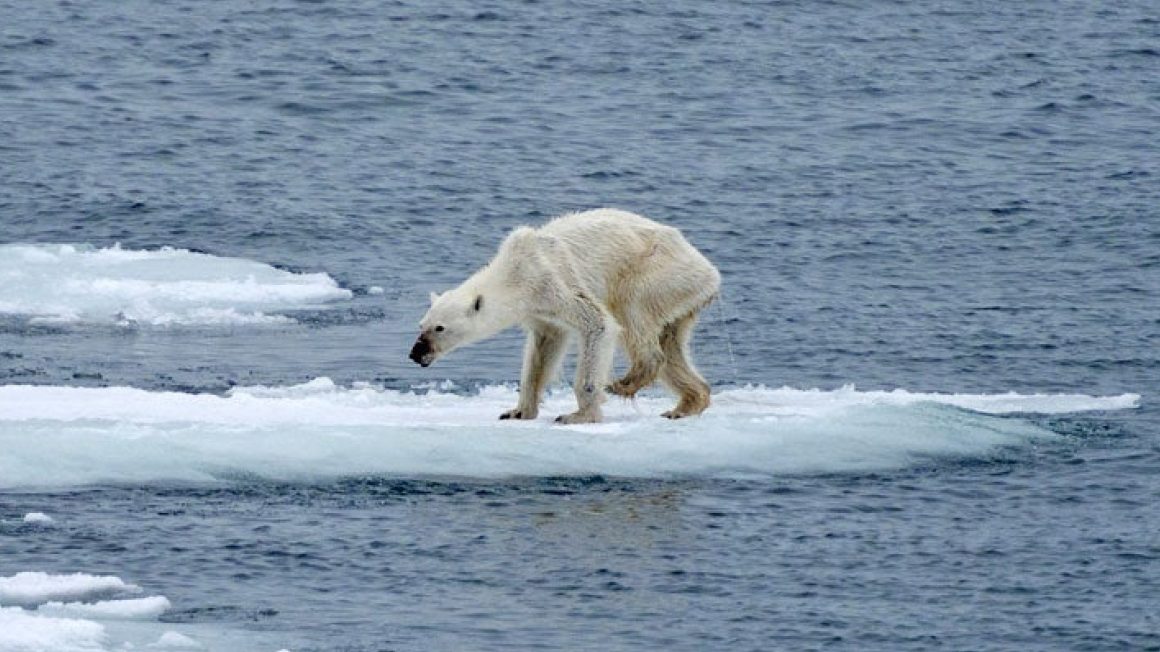
Figure 2. The reduction in sea ice will lead to a decrease in food availability, causing polar bears to starve and lose muscle such as the one shown here.
In an effort to try and salvage the polar bears’ habitat, many world-wide organizations have taken action. The World Wildlife Fund has been working to protect the remaining ice left in Canada and Greenland. Polar Bears International hosts a variety of awareness events, such as Polar Bear Week, to educate people on the challenges that polar bears face and ways in which the public can help conserve their habitat. With that said, let’s try to do our share to protect the polar bear before it's too late.
Comments
Post a Comment